
A free toolkit with simple activities to help young people manage anxiety and feel calm.
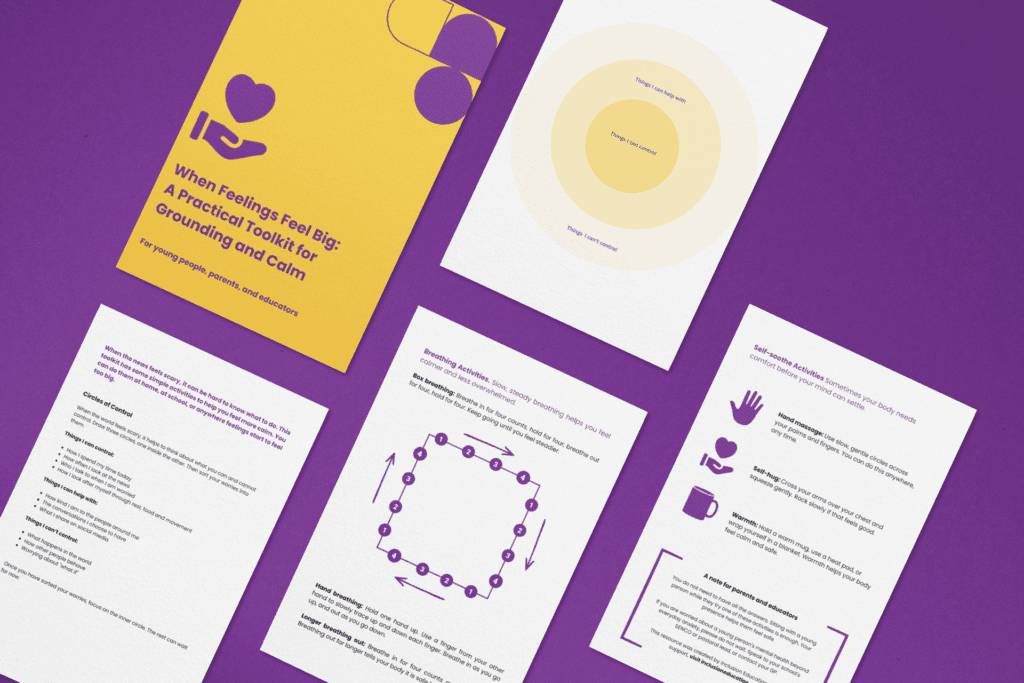
At the moment, we are being bombarded with conflict and breaking news, making the world feel frightening for both young people and adults. Parents and educators are often the first to help young people interpret what they see and hear.
In line with the principles of The Inclusion Way, our young people need to feel seen, heard, and safe. We have created this guide based on our experience to provide practical steps to support students when the news becomes distressing.
Children and young people constantly absorb news. They listen to peers, watch reels, read group chats, and overhear adult conversations. Many will arrive at school already anxious, confused, or upset. But they may not have the language or confidence to tell you why.
For young people with mental health needs, trauma histories, or SEND, distressing news can be especially overwhelming and may affect behaviour and classroom engagement.
These are not signs of naughtiness or defiance, but rather that a young person is carrying something hard to process.
Being mindful of this is the first step to supporting the young people in your care.
You go first. Some young people may be holding everything internally without showing it. You can gently open the conversation by sharing how you might be feeling and asking the group if they’d like to talk about it. This validates their internalised feelings and helps them feel less alone.
Young people need to know that their feelings are valid. Fear, sadness, and confusion are natural responses to seeing conflict and suffering in the news. Try not to divert them from the conversation by telling them not to worry or that everything will be fine. This can leave them feeling dismissed and less likely to share their feelings in the future.
Try language like:
“It makes sense that you feel worried. A lot of people feel that way right now.”
“You are allowed to feel sad about what is happening, even if it is far away.”
“I am glad you told me. Let’s talk about it together.”
Not every young person will want to discuss things in a group setting. Some will find that reassuring. Others will prefer a quieter, one-to-one conversation. Keep both options open. An open door for private conversations means no one has to process things in public if they are not ready.
Group conversations can also be tricky as young people come with different levels of knowledge, experience, and emotional readiness. When people feel uncertain or uncomfortable, they can reach for humour or flippant remarks without realising the impact those can have on others in the room. It is worth naming this before a discussion begins. Encourage students to be aware of the people around them. Remind them that a genuine question, however simple, is always better than a joke to mask uncertainty.
Uncertainty can be more frightening than the truth. Young people often fill knowledge gaps with their worst fears. Calm, factual information helps to ground them.
You do not need to share every detail. Tailor what you say to the age and readiness of the young person in front of you.
If a young person asks something you cannot answer, it is fine to say, “That’s a really important question. I don’t know the answer right now, but we can find out together.” This shows honesty and keeps the conversation open.
Again, keep an open door.
Some young people will already be aware that not everything they see online is accurate. Others may be encountering misinformation without realising it. Peers may share things in group chats that are misleading, distressing, or simply untrue.
It is worth talking about this directly. Help young people understand that not all sources are reliable. Encourage them to pause before sharing something they are unsure about. Remind them that they can always come to you if something they have read or seen is worrying them.
Let them know they are allowed to set boundaries for what they engage with. Stepping away from a group chat or muting notifications is not a weakness; it is a healthy choice.
Put simple checks in place, too. As a class or group, agree on what kinds of links or content are appropriate to share. Make clear that you are a safe person to come to if something harmful or upsetting appears.
In times of conflict, other narratives can creep in. Divisive language, blame, and fear about particular groups can spread quickly, including between young people. You may hear things in the classroom or corridor that reflect this.
It is important to name it gently but clearly. Remind young people that the values of your school community do not change, even when the news is frightening. Everyone in the room deserves to feel safe and included.
Constant exposure to distressing content is harmful for everyone, yet the news cycle is easy to get sucked into. Talk openly about boundaries with the news, making it clear that giving yourself a break doesn’t mean you don’t care.
Encourage simple habits:
Build in time for grounding activities, creative expression, and movement. Check in with learners who seem withdrawn or unsettled. Make it clear that your classroom is a safe space to bring difficult feelings.
If you are concerned about a young person’s mental health, do not wait. Speak to your SENCO or pastoral lead. Refer to your school’s safeguarding processes. Point young people and their families towards the support services available to them.
You cannot pour from an empty cup. Educators absorb a great deal of emotional weight on behalf of their pupils. Add to the fact that the current news climate affects you, too.
Talk to a colleague. Take your breaks. Set your own boundaries with the news. Remember that you do not need to have all the answers. Being present, consistent, and caring is enough.
Mind: Coping with distressing events in the news — mind.org.uk
BBC Bitesize: Talking about the news — bbc.co.uk/bitesize/articles/zqkfb7h
Barnardo’s: How to talk to your children about distressing news — barnardos.org.uk
Key Takeaways:
1. Validate young people’s feelings about difficult news.
2. Offer honest, age-appropriate information and address misinformation directly.
3. Provide choices for group or individual discussions.
4. Encourage healthy boundaries with news and social media.
5. Promote inclusion and kindness within your community.
6. Support mental health and know when to refer on for additional help.